
How to Choose the Right Smoke Alarm for Your Home
New guidance covers placement, power sources, interconnection, and routine maintenance. WILMINGTON, Del. - Oct. 5, 2026
Press Release Disclaimer: This is a press release distributed through the XPR Media network. It has not been independently verified by our newsroom.
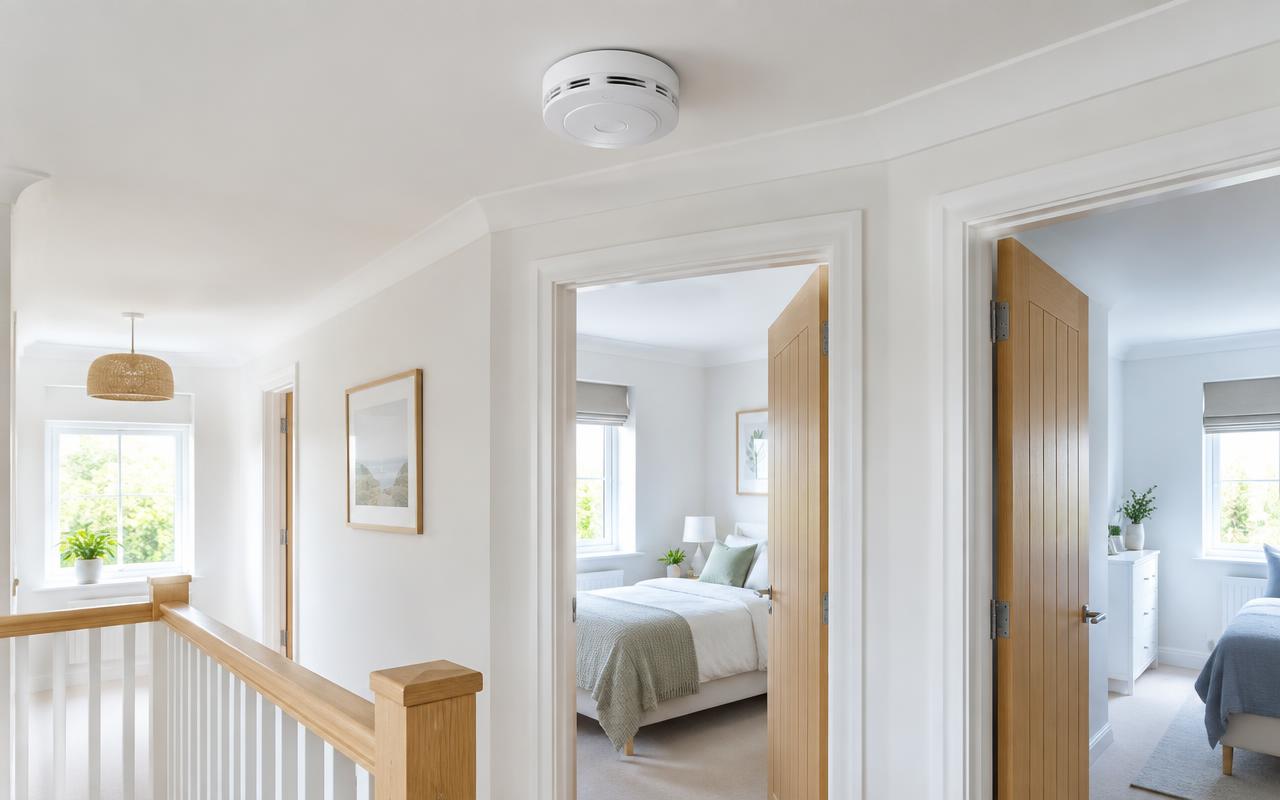

New guidance covers placement, power sources, interconnection, and routine maintenance.
WILMINGTON, Del. – Oct. 5, 2026 – X-SENSE has issued new guidance for homeowners evaluating or replacing their smoke alarm systems, including several considerations that impact the design and upkeep of a smoke alarm system.
It includes information on alarm placement, power sources, interconnection, and regular testing in the home. It will also clarify why different properties can have different smoke alarm setups and not rely on a single type and feature of smoke alarms.
Anyone who aspires to own a home should start to concentrate on the layout of their house. The number of floors, bedrooms, hallways, and other areas where the alarm sound might be difficult to hear can all impact coverage. The number and location of fire and building alarms may also be influenced by local fire and building needs.
Of course, placement comes into the equation. Manufacturers should be followed for smoke alarm installation, and they should be installed where there is white smoke, not where it may affect the cooking or be cooked.
X-SENSE also elucidates the differences between standalone and interconnected alarms. A standalone unit will sound upon sensing smoke in the vicinity, and interconnected units can communicate with other compatible units and other parts of the home.
This can be useful in multi-level properties, where an alarm sounding downstairs may otherwise be harder to hear from an upstairs bedroom. Homeowners comparing a smoke detector can choose from standalone, wireless interconnected, Wi-Fi-enabled, and base-station-connected options, depending on the type of coverage required.
Another functional factor to take into account is a power supply. Some alarms are based on batteries that can be changed, and some have sealed batteries that have a given service life. Hardwired alarms are linked to the home’s electrical system and can optionally be battery backup alarms.
Long-life batteries or sealed batteries are no exceptions to the testing or eventual replacement rules, says X-SENSE. Homeowners should examine the date the alarms were manufactured, or the suggested service life, even if they seem to be functioning properly.
The guidance also clarifies wireless interconnection is different than Wi-Fi. Wireless interconnected alarms can communicate with compatible alarms directly (radio frequency), without a home’s internet connection.
One example is the X-SENSE SD19-W wireless interconnected smoke alarm. According to X-SENSE product information, the model uses photoelectric smoke-sensing technology, supports wireless interconnection, and includes a sealed battery designed for a 10-year service period.
X-SENSE advises homeowners to regularly test alarms and listen for any alarm low battery alarm or low battery alarm (or end-of-life warning). Cleaning and maintenance should be conducted in accordance with the manufacturer’s recommendations, and nuisance alarms should not be switched off without first examining the alarm location and/or installation even if nuisance alarms are triggered by a nuisance source.
Smoke alarms are only part of a multi-stage fire/wireless notification system. Routes of escape and having a plan for household emergencies and knowing the procedures in case of an alarm are very important no matter what type of alarm is installed.
About X-SENSE Innovations
Founded in 2013, X-SENSE Innovations develops residential fire and home safety products, including smoke alarms, carbon monoxide alarms, heat alarms, combination alarms and connected home safety systems. X-SENSE USA LLC is registered at 1209 Orange St., Wilmington, DE 19801.
More information is available at https://www.x-sense.com/.
Media Contact
Farrukh
X-SENSE
service@x-sense.com
+1 (833) 952-1880
https://www.x-sense.com/


